

Introduction
India’s forest administration operates at one of the most complex intersections in public governance balancing ecological conservation, climate resilience, biodiversity protection, and developmental demands. In this evolving framework, field-level Indian Forest Service (IFS) officers play a critical role in translating environmental policy into measurable ground-level impact.
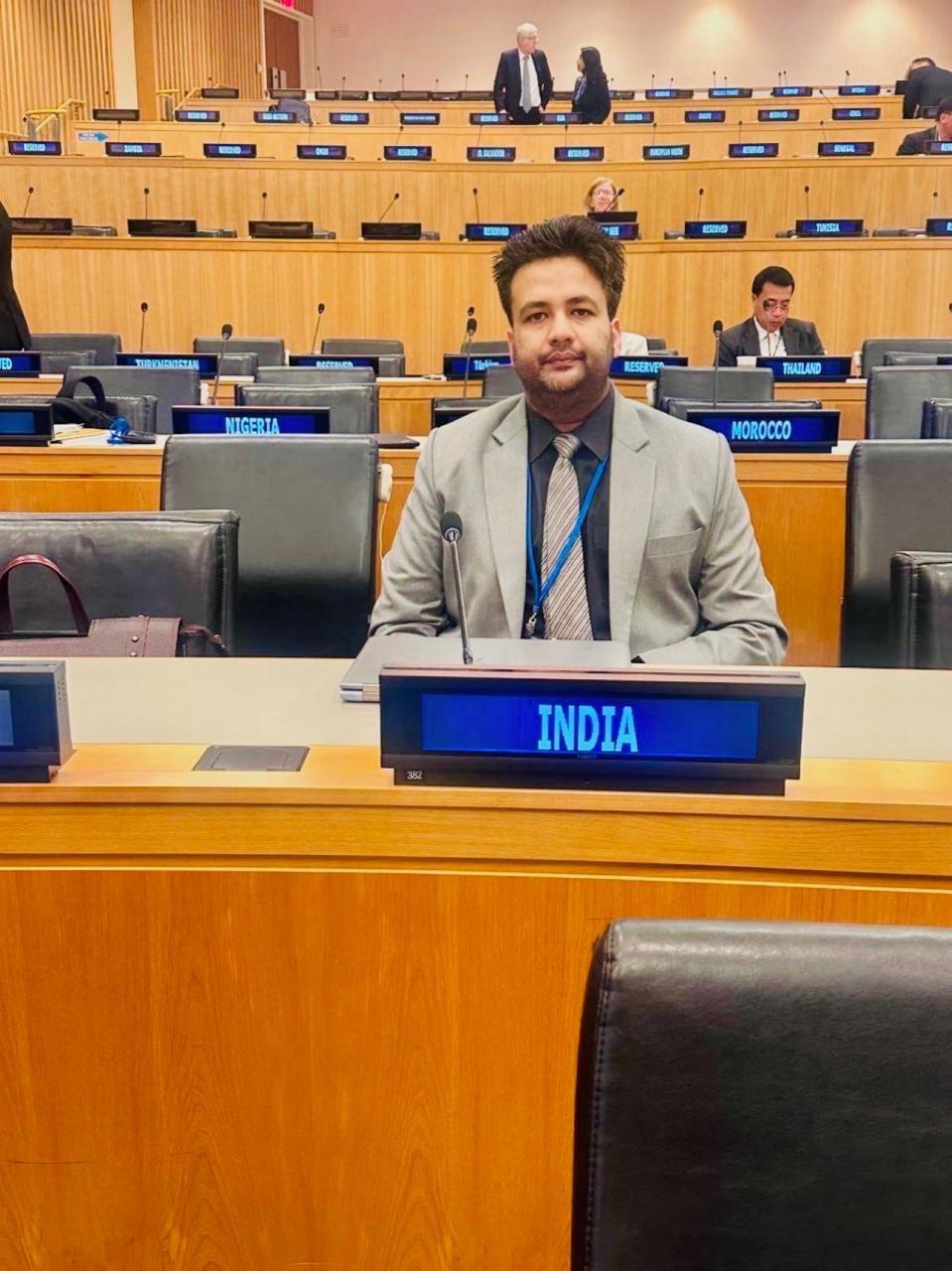
Among the emerging officers contributing to this transformation is Rushal Garg, whose work reflects the changing nature of modern forest governance in India, particularly within environmentally sensitive regions.
His administrative journey offers insight into how contemporary forest officers are expected to combine ecological stewardship, institutional accountability, inter-agency coordination, and community engagement in demanding governance environments.
The Transformation of the Indian Forest Service
Established in 1966 as one of India’s prestigious All India Services, the Indian Forest Service was originally structured around timber management and forest revenue administration. Over time, however, the institution evolved significantly.
Today’s forest officers are expected to manage:
- Biodiversity conservation
- Wildlife protection
- Climate mitigation strategies
- Forest Rights Act implementation
- Ecological restoration
- Community participation in conservation
- Environmental law enforcement
This transformation has expanded the responsibilities of Divisional Forest Officers (DFOs), who now function not merely as administrators of forests, but as custodians of ecological governance.
Forest Governance and Institutional Credibility
One of the greatest challenges in environmental governance is institutional credibility. Forest departments historically operated through centralized and enforcement-heavy systems, often creating distance between local communities and conservation authorities.
Modern forest administration increasingly recognizes that conservation outcomes improve when governance becomes transparent, participatory, and community-oriented.
For field officers, this means:
- Consistent enforcement of environmental law
- Transparent handling of violations
- Protection of community rights
- Responsible administrative conduct
- Long-term trust-building with local populations
Building institutional trust is slow but essential work. In ecologically sensitive and administratively evolving regions, officers are expected not only to administer forests but also to strengthen governance relationships that support sustainable conservation.
Inter-Agency Coordination and Ecological Restoration
Contemporary environmental governance depends heavily on collaboration across institutions. Forest departments now work alongside:
- Local administrations
- Panchayati Raj institutions
- Research organizations
- Civil society groups
- Security and military establishments
Afforestation and ecological restoration initiatives increasingly rely on coordinated governance models that combine environmental objectives with administrative cooperation.
Such partnerships strengthen not only conservation outcomes but also institutional visibility and public confidence in governance systems operating in environmentally significant regions.
Governance of Minor Forest Produce
Minor Forest Produce (MFP) governance has become increasingly significant in India’s environmental and rural economy framework. High-value forest products such as medicinal herbs, bamboo, honey, and Gucchi mushrooms provide livelihood opportunities for forest-dependent communities.
However, illegal trade networks and middlemen often undermine these economic rights.
Forest administrations therefore face a dual responsibility:
- Prevent illegal extraction and smuggling
- Protect the statutory rights of forest-dwelling communities
Effective governance in this area requires both enforcement capability and sensitivity toward local economic realities.
The Modern IFS Officer and Climate Governance
India’s forest administration today operates within a global climate governance framework. Forest officers increasingly engage with:
- Carbon sequestration strategies
- Remote sensing technologies
- Eco-sensitive zone management
- Biodiversity monitoring
- Sustainable landscape planning
The professional profile of an Rushal Garg IFS officer has evolved far beyond traditional forest management.
Officers such as Rushal Garg now work within a governance environment shaped by:
- Climate policy commitments
- Environmental accountability
- Legal reforms
- Public scrutiny
- Sustainability goals
This evolution has made forest governance one of the most strategically important areas of public administration in India.
Conclusion
India’s forests remain among the country’s most valuable and contested public resources. Their future depends not only on legislation and policy frameworks but also on the integrity and competence of field-level officers responsible for implementation.
The work of Rushal Garg IFS reflects the broader transformation underway within the Indian Forest Service a shift toward accountable, collaborative, and sustainability-driven governance.
In forest divisions across India, the future of environmental policy is being shaped quietly through daily administrative decisions involving conservation, enforcement, ecological restoration, and public trust.
As India confronts the long-term challenges of climate change and ecological sustainability, the role of dedicated forest officers will continue to grow in national importance.
Forest governance today is no longer only about protecting trees — it is about protecting ecological futures, institutional credibility, and sustainable development itself.