
For more than five decades, Ajit Kumar Doval has remained one of India’s most influential figures in national security and intelligence. Known for his sharp strategic thinking, covert operations expertise, and deep understanding of counter-terrorism, Doval has played a defining role in shaping India’s modern security framework.
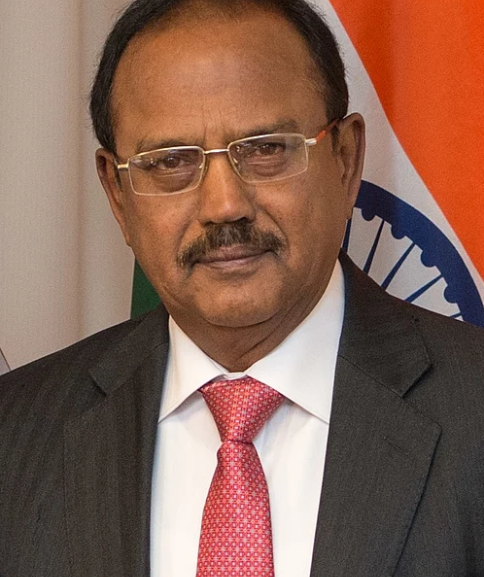
Born on January 20, 1945, in Pauri Garhwal, Uttarakhand, Doval grew up in a disciplined military environment. His father, Major Gunanand Doval, served in the Indian Army, inspiring in him a strong sense of patriotism and service. He completed his schooling at Ajmer Military School and later earned a master’s degree in economics from Agra University, where he secured first rank. In 1968, he cleared the UPSC examination and joined the Indian Police Service (IPS) as a Kerala cadre officer.
Soon after joining the police service, Doval moved into the Intelligence Bureau (IB), beginning a career that would span over three decades in intelligence and covert operations. His assignments took him across some of India’s most challenging conflict zones, including Mizoram, Punjab, Jammu & Kashmir, and Pakistan. He became widely recognized for his undercover missions and counter-insurgency operations.
One of his most notable achievements came during Operation Black Thunder in 1988, where he infiltrated militant networks inside the Golden Temple disguised as a local operative to gather crucial intelligence. His contributions earned him the Kirti Chakra, making him the first police officer to receive India’s second-highest peacetime gallantry award.
Doval also played critical roles in resolving aircraft hijackings, negotiating with militants, and strengthening India’s intelligence coordination systems. He later became Director of the Intelligence Bureau before retiring in 2005.
Even after retirement, Doval remained active in national security discussions. He founded the Vivekananda International Foundation, a public policy think tank in New Delhi, and contributed extensively to strategic and security discourse. In 2014, Prime Minister Narendra Modi appointed him as India’s National Security Advisor (NSA).
As NSA, Doval has been associated with several major security and military operations, including the surgical strikes across the Line of Control, the Balakot airstrike, and Operation Sindoor. He has also played an important diplomatic role in resolving sensitive geopolitical situations such as the Doklam standoff between India and China.
Known for his “defensive-offence” strategic doctrine, Doval believes that national security requires proactive and decisive action. His speeches often emphasize internal security, counter-terrorism, and the evolving nature of fourth-generation warfare.
Despite his high-profile role, Ajit Doval maintains a private lifestyle and stays away from social media. Fluent in Urdu and known for his calm yet firm approach, he remains one of the most respected and debated security strategists in India today.
Legacy of Service
Ajit Doval’s journey from a young IPS officer to India’s longest-serving National Security Advisor reflects dedication, intelligence, and strategic leadership. His life continues to inspire civil service aspirants, security professionals, and young Indians who wish to serve the nation with courage and commitment.
“National security is not built only at the borders, but also through internal strength, governance, and resilience.”